GOOGLE REVIEWS

In this competitive and uncertain business landscape, maximising productivity and efficiency is key to staying ahead. As you juggle multiple responsibilities, wearing all the different hats small business owners need to, finding ways to streamline your marketing efforts and generate more leads becomes crucial. To save time and money you can implement marketing automation to grow your business.
Luckily, there’s a valuable tool at your disposal: Marketing Automation.
By implementing some simple yet impactful marketing automation on your website, you can increase efficiency, save time, and enhance customer engagement. We’ll show you some of the easier-to-implement automations that we recommend to most of our clients, and even a couple more advanced ones to give you an idea of what you can achieve with marketing automation platforms.
What is Marketing Automation?
First, we should discuss exactly what we mean by “Marketing Automation“. Marketing automation is a powerful tool that has become increasingly popular among businesses of all sizes and industries. At its core, marketing automation is primarily used to streamline and simplify repetitive marketing tasks, allowing marketing and sales teams to focus on more important aspects of their job.
When used properly, marketing automation enables you to deliver personalised, timely, and relevant messages to your target audience across various channels, such as email, social media, websites, and more. It eliminates the need for manual repetitive tasks, saving time and resources while maintaining consistency in communication.
According to Campaign Monitor; automation has resulted in 80% ROI, +46% growth, +26% more leads.
Source: campaignmonitor.com
Marketing automation is a useful tool for lead generation, prospect nurturing, and revenue and ROI growth, but it should not be viewed as a replacement for human skills or as a quick-fix solution. It’s your best weapon to engage with your potential customers and reach the right subscribers at the right time.
What is Marketing Automation Used For?
One of the primary uses of marketing automation is email marketing. By using an email marketing automation tool, you can create and manage email campaigns more efficiently than ever before. This includes creating email templates, scheduling emails to be sent at specific times, and setting up automated follow-up emails to engage with leads and customers. This extends to creating and managing different nurturing campaigns – sometimes called drip campaigns (we’ll talk about this in greater detail below). By setting up specific triggers and workflows, you can create personalised drip campaigns that move leads through the customer journey and convert them into paying customers.
Marketing automation is also frequently used to manage social media platforms. Social media is an essential part of any modern marketing strategy, but creating and scheduling posts can be time-consuming and tedious. With social media automation tools, you can schedule and publish posts across multiple platforms, saving valuable time and ensuring a consistent user experience for your audiences.
In addition to email and social media, automation can also be used to track customer behaviour and provide personalised experiences. By using data analysis and automation workflows, marketing teams can create targeted marketing campaigns that speak directly to the needs and interests of individual customers, resulting in increased customer satisfaction and retention.
There is a huge variety of Marketing Automation Platforms available. For our clients we use SharpSpring / Constant Contact and Vbout, depending on the individual business requirements – but there are plenty of others such as ActiveCampaign, and HubSpot – each has its different strengths and weaknesses, features, and price points.
What Are The Benefits Of Marketing Automation?
As previously mentioned the importance of the boost to productivity and efficiency, by automating repetitive marketing tasks can’t be overstated. By creating email automation workflows and templates, businesses can send out promotional and transactional emails automatically, freeing up time for your sales teams to focus on more important tasks.
Marketing automation workflows can help optimise the customer journey from start to finish. You can track customer behaviour and preferences, nurture them through various touchpoints, from lead capture to conversion and deliver relevant content that is tailored to their interests.
This lets you create highly targeted content for customers, and place it in the best channel for them, improving the customer experience and building stronger relationships with your audience. This approach makes the sales process far easier by the time a prospect gets in touch with you. As industry-leading Digital Marketing expert Neil Patel explains:
“The truth is that 70% of the buying cycle is complete before the customer contacts sales.”
Source: neilpatel.com
Simple Marketing Automation Examples
Marketing automation can seem complex and overwhelming, but it doesn’t have to be.
In fact, there are many simple marketing automation examples that businesses can implement to improve their marketing efforts and save time. Here are a few examples:
Welcome emails
When someone first subscribes to your email list, send them a welcome email. Welcome emails help establish a relationship with your audience and can set the tone for future communications.
According to Webfx.com, welcome emails have the potential to result in 320% more revenue than promotional emails with a sales-focused approach.
Source: webfx.com
Nurturing Campaigns / Drip Campaigns
Build strong relationships with your prospects through nurturing campaigns – which involves sending a series of emails to leads over time, triggered by their behaviour or preferences. For instance, if a website visitor downloads a PDF from your website, you can set up a drip campaign that gradually delivers additional relevant content, keeping them engaged and informed. By automating a series of personalized emails, you can deliver relevant content, educational resources, and special offers to guide your leads through the buyer’s journey, nurturing them towards making a purchase.
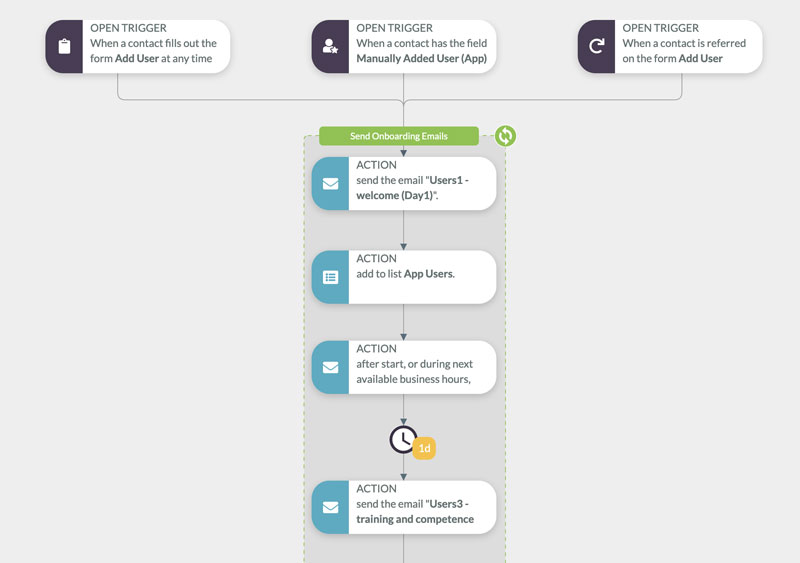
Related to that is an Onboarding Campaign, which is a series of emails for new customers (rather than prospects) providing new customers with essential information about your business, product features, and tips to maximize their experience. We set up an onboarding campaign for Safety PAL, with a series of explanatory emails to guide new users through the various features of the Health and Safety App.
Personalised Autoresponder
Track potential customers’ behaviour and send them personalised content. For example, if a customer visits your website and clicks on a particular page, and asks for more information, rather than waiting for you to get back to them, an automation platform could send them an email with more information about that product or service immediately.
Email campaigns that feature product recommendations generate 31% more revenue compared to those without them.
Source: mailchimp.com
Lead Scoring and Segmentation
Not all leads are created equal! Some potential customers are naturally going to be more valuable to you than others. Lead scoring can help you distinguish who are the best leads – IE who has been looking at a webpage about your high-ticket products/services, and who has just been looking at your freebies and lead magnet. By assigning scores based on lead engagement and behaviour, you can prioritise follow-ups and tailor your marketing messages to specific segments, increasing conversion rates.
Enjoying This Article?
Never miss another one...
Sign up for our e-mail newsletter and we'll let you know when we publish new pieces like this to help you on your marketing journey.
Chatbots
You can elevate customer support through the use of chatbot automation. Chatbots on your website can deliver instant responses to frequently asked questions, assist customers throughout the buying process, and capture valuable lead information – gathering valuable information to fuel your marketing efforts.
With chatbots, you can provide round-the-clock assistance, ensuring a seamless and efficient user experience. By automating these interactions, you save time and resources while delivering prompt and accurate support.
Ask for Referrals
Automate referral requests to turn satisfied customers into brand advocates. Incentivise them to refer friends and colleagues, expand your customer base through trusted recommendations, drive business growth and tap into the influential network of your satisfied customers.
Referred customers are highly valuable and more likely to convert, so express genuine appreciation to customers who refer others, strengthening the bond between your brand and customers.
Word of mouth is some of the very best marketing your business will get – referral campaigns help you harness that power for yourself. We’ve written more about why you need a referral campaign.
Ask for Reviews
Prompt satisfied customers to leave feedback on platforms like Google or Yelp, bolstering your online reputation, enhancing your credibility and visibility in search results, and influencing potential customers.
Automated requests streamline the process, saving you time and effort – and you’ll never forget to ask again! Be sure to strike a balance with non-intrusive timing and frequency – we recommend asking 3 times – and remember to include clear instructions and links as to where you want them to leave you a review.
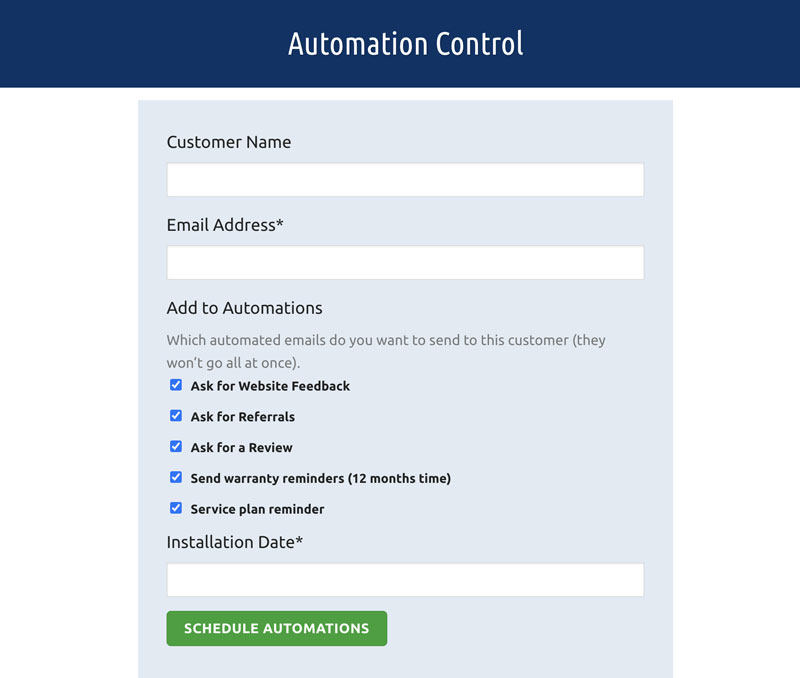
We recently implemented automated review reminders for our client Mansfield Garage Doors, who have always received great reviews, but in amongst all the other jobs that need doing in a family-run business, they would sometimes forget to ask their customers, let alone remind them 3 times!
Cart Abandonment Emails
Essential for any e-commerce website. If a customer adds items to their cart but doesn’t complete the purchase, send them an automated email reminding them of the items in their cart. According to eCommerce the Baymard Institute, the average cart abandonment rate is a staggering 69.82% – calculated from 46 different studies between 2012 and 2021, but the good news is approximately 48% of cart abandonment emails are opened.
Source: baymard.com
Source: processmaker.com
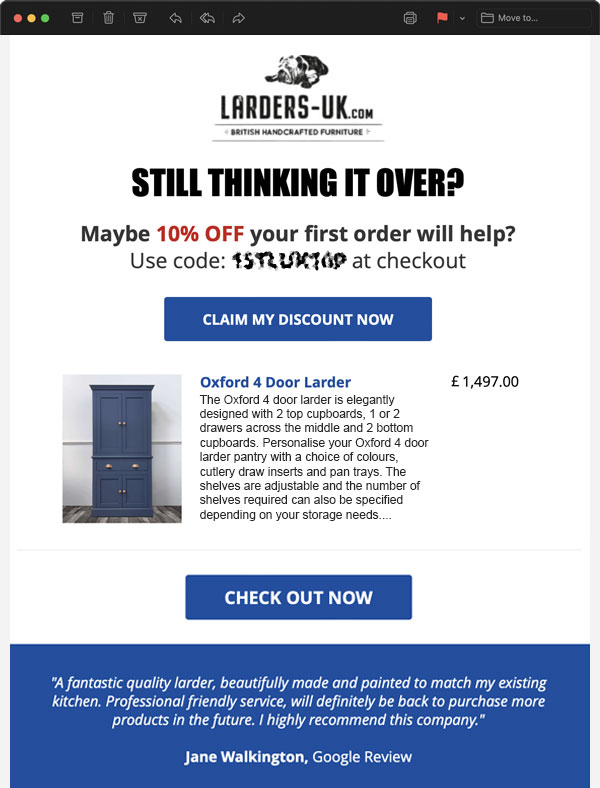
Recover potential lost sales by sending timely reminders or offers to customers who have left items in their carts or browsed your website without making a purchase, nudging them towards conversion. We have implemented such a system for our client Larders-UK.com.
We have lots of detail on cart abandonment that you can read.
Follow-up Emails
After a customer makes a purchase, seize the opportunity to send an automated follow-up email expressing gratitude and appreciation. Thank them for their purchase and show that their support is valued. This gesture not only enhances the customer experience but also encourages repeat business and fosters loyalty.
The implementation of this automation has led to a noticeable increase in open and click rates for a Mailchimp client, with a 20% and 50% improvement respectively compared to their typical campaigns.
Source: mailchimp.com
In the follow-up email, provide additional support or resources related to their purchase, ensuring they have a smooth and satisfactory experience. By automating this process, you can consistently nurture customer relationships and create a positive impression that encourages long-term engagement and advocacy for your brand.
It also offers you the opportunity for…
Upselling/Cross-Selling Campaigns
Boost your revenue with automated upselling and cross-selling campaigns. Use tracked customer behaviour and purchase history to suggest complementary or upgraded products, increasing the average order value and enhancing customer satisfaction.
Upselling and cross-selling campaigns not only drive immediate revenue growth but also deepen customer engagement and loyalty. Automation allows you to intelligently recommend relevant offerings, providing customers with a seamless and personalised shopping experience while boosting your bottom line.
Customer Feedback Surveys
Gain valuable insights into customer experiences and satisfaction levels with automated customer feedback surveys. Prompt customers to share their thoughts and suggestions, enabling you to continuously improve products and services. By automating the survey process, you streamline data collection and eliminate manual efforts.
Analysing customer feedback helps identify areas for enhancement, ensuring you meet and exceed their expectations. Leverage surveys to proactively gather valuable insights, enabling data-driven decision-making and fostering a customer-centric approach. Show your customers that their opinions matter and make informed improvements that drive long-term success for your business.
Reminders for Events or Webinar Registrations
If you run in-person or online events, automated reminders help boost attendance and ensure that those who sign up actually show up. Send timely email campaigns or SMS notifications to registered participants.
By keeping your audience informed and reminding them of the upcoming event, you increase their chances of participation and maximize the impact of your gatherings. Don’t let no-shows dampen your efforts—automated reminders will keep your attendees on track and eager to connect with you.
Don’t Ignore Marketing Automation
Marketing automation is a powerful tool that you simply can’t ignore if you want to grow and scale. By saving time, improving engagement, and delivering personalised experiences, marketing automation can help you drive revenue and achieve long-term success.
By implementing marketing automation within your website marketing, you can enhance your marketing strategies, improve productivity, and increase lead generation. Whether it’s nurturing campaigns, personalised recommendations, or referral and review gathering strategies, automation will help you engage with your audience, increase conversions, and ultimately drive business growth.
Xposure, Marketing Automation Agency Newark & Mansfield
Based between Mansfield & Newark in Nottinghamshire our boutique marketing agency services provide hands-on experience and knowledge to businesses throughout the East Midlands.
We work with businesses on a monthly bases to help them identify potential markets, and build creative, results-driven marketing campaigns that target their ideal customers to turn them into qualified leads. If you would like some help automating some of your sales and marketing processes or identifying the best leads through website customer behaviour – please get in touch with us below.