GOOGLE REVIEWS

Do you want to get the most out of your advertising budget? Are you trying to decide between Google Ads and Facebook Ads for your business? It can be difficult to know which one is better for you, as both have their own unique benefits and drawbacks.
Digital advertising has become an integral part of businesses in all industries, with both Google Ads and Facebook Ads proving to be important tools for reaching potential customers – and two of the most popular digital advertising platforms available today. While each has its own unique strengths, it is important to understand their respective pros and cons when determining which one is best for your business.
We’ll look at the pros and cons of each platform, and consider your business goals so that you can make an informed decision on which platform is best for your business to target your ideal customer in your industry. With this information in hand, you can make the right choice when it comes to boosting your business with either Google Ads or Facebook Ads, or whether you need a mix of both.
What Is Google Ads?
Google Ads is a paid advertising platform developed by the largest search engine Google, designed to help advertisers reach their target audiences online.
It places search ads in the results of search queries on Google Search and non-search websites, mobile apps, and videos. Advertisers bid for placement in the ranking, so if the search volume for the terms is high, you may need to allocate a higher budget for the cost per conversion rate on these keywords. Google Ads also provides data tracking capabilities, so you can monitor your progress and view those metrics in either Google Analytics or a client reporting tool like AgencyAnalytics. This lets you measure the success of your campaigns with ease. With robust features and targeting options, such as lookalike audiences, Google Ads is an effective way to get your business seen by potential customers.
Google Ads is a powerful tool to help businesses grow and reach their target audiences. With its data tracking capabilities, you can easily monitor your campaigns’ performance and make the necessary adjustments to align this with your business objectives and maximise return on investment. And with that, let’s take a look at some of the Benefits of Google Ads!
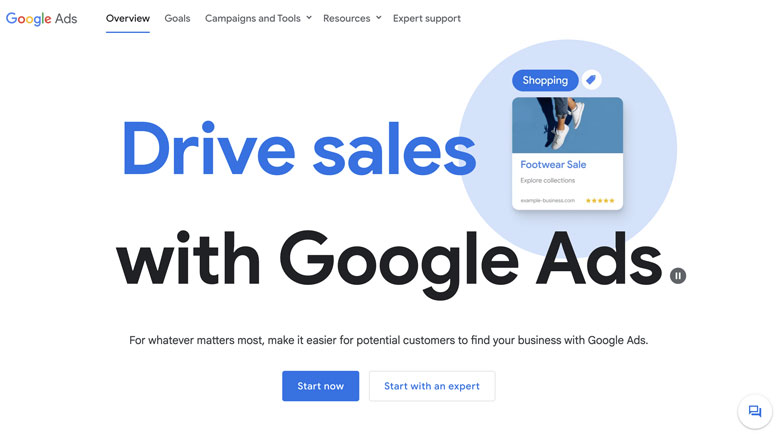
The Benefits of Google Ads
There are many benefits to using Google Ads. It allows you to gain visibility by reaching potential customers who are actively searching for relevant keywords related to your services or products. It also gives you access to detailed reports about their campaigns so you can see what works and make adjustments accordingly.
Additionally, remarketing capabilities allow you to re-engage with active users who have previously interacted with your company online – this is called remarketing or sometimes retargeting. This helps you stay top of mind with your target audiences even after they’ve left the website or app.
An added benefit is that your ad performance can help you optimise your organic SEO – I.e. if you receive a lot of clicks on adverts with a particular key phrase, that’s a good indicator you should be focussing on that phrase for your organic search too.
What Is Facebook Ads?
Through paid Facebook campaigns, you can customise your ads to reach the exact people you need to. Ads can be tailored using advanced targeting options such as demographics to reach prospective customers with different characteristics such as age, gender, location, interests, and more. They also come in various formats such as single images, videos, slideshows, carousels and collections.
Facebook Ads also provide detailed insights into the performance of your campaigns so you can adjust them accordingly. This includes metrics like impressions, clicks, average conversion rate and cost per acquisition (CPA). You’re also able to set up rules so that your ads are automatically optimised to suit your business goals and your desired outcomes such as visits to a webpage, form sign-up, purchases, etc.
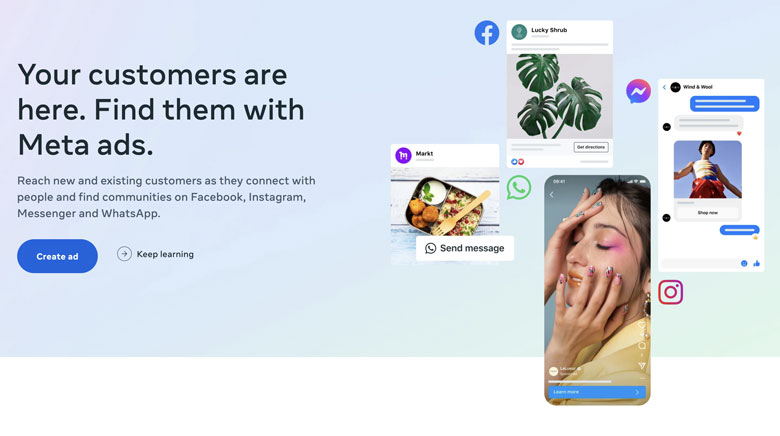
Benefits of Facebook Ads
The main benefit of Facebook Ads is the advanced targeting capabilities; you have greater control over who sees your ads and how often they’re seen and so is an effective way for you to reach potential customers leveraging the world’s most popular social network. This means that well-defined customer personas are a must to get the most out of Facebook Ads.
The insights that businesses gain from Facebook Ads are invaluable. Metrics like impressions, clicks, conversions and cost per acquisition (CPA) provide solid information about the performance of campaigns so that adjustments can be made accordingly.
Ultimately, Facebook Ads is a great tool for you to reach your target audience with customised messages that are tailored to each individual user’s interests. It allows businesses to maximize their reach while increasing visibility and driving engagement with relevant audiences. A well-executed Facebook Ad campaign can increase your visibility and drive engagement with relevant audiences.
Enjoying This Article?
Never miss another one...
Sign up for our e-mail newsletter and we'll let you know when we publish new pieces like this to help you on your marketing journey.
What’s the difference between Google Ads and Facebook Ads?
The main difference between Facebook Ads and Google Ads is their channel. Google Ads runs search and display ads on the world’s most popular search engine, whereas Facebook Ads are used to target people on the social media platform.
Both platforms offer different targeting capabilities to ensure your ads reach the right people at the right time. Google Ads allows for more granular targeting options such as demographic data and keyword bidding while also having an advantage in terms of visibility on SERPs (search engine result pages). Meanwhile, Facebook offers more detailed audience segmentation through its interest-based targeting feature and access to valuable data insights about consumer behaviour.
It’s also important to consider the cost of each platform. Google Ads on average costs more per click than Facebook Ads, but with a larger reach and greater purchase intent from users, you may be able to invest in higher-quality campaigns that convert better in the long run. On the other hand, Facebook Ads offers a lower cost-per-click rate but requires a more targeted approach as its audience is smaller.
Additionally, Google Ads focuses more on capturing demand with high purchase intent, while Facebook Ads allows you to reach a wider custom audience through its advanced targeting capabilities.
Here’s a Handy Pros & Cons Breakdown of Google Ads vs. Facebook Ads
Google Ads Pros:
- Extensive reach with access to a massive search engine user base.
- Strong intent-based targeting, reaching users actively searching for specific products or services.
- Diverse ad formats including text ads, display ads, shopping ads, and video ads.
- Remarketing capabilities for reaching users who have previously visited your website.
- Flexible budgeting options and control over ad spend.
- Detailed performance tracking and conversion tracking features.
- Wide range of ad extensions to enhance ad visibility and provide additional information.
Facebook Ads Pros:
- Extensive targeting options based on demographic, interests, behaviours, and connections.
- Large user base and high engagement, allowing for effective audience reach.
- Rich ad formats including images, videos, carousels, and dynamic product ads.
- Advanced retargeting capabilities to reach users who have shown interest.
- Powerful analytics and reporting tools for tracking ad performance.
- Opportunity to leverage Facebook’s social context and user recommendations.
- Lower cost per click compared to Google ads in certain industries.
Google Ads Cons:
- Higher cost per click compared to Facebook ads in certain industries.
- Ad visibility may be affected by ad blockers and competition.
- Limited control over ad placements, particularly with display network ads.
- Ad fatigue may occur when targeting specific keywords.
- Requires ongoing optimization and management to maintain performance.
- Limited demographic targeting options compared to Facebook ads.
Facebook Ads Cons:
- Ad fatigue can be an issue due to frequent ad exposure.
- Users are primarily engaged in social activities, which may lead to lower purchasing intent.
- Ad placements within the Facebook feed may distract users from the intended goal.
- Limited search intent targeting compared to Google ads.
- Competition for ad space is high, potentially increasing costs.
- Limited visibility outside of the Facebook platform.
Your Campaign Goal
The success of your campaign depends on understanding your campaign goal:
If you’re looking to generate brand awareness or increase website traffic, Facebook Ads can be a great choice. With its advanced targeting capabilities, you can reach the exact audience you’re looking for while optimizing your budget.
On the other hand, if you’re looking to capture prospective customers with high purchase intent, Google Ads is the way to go. You’ll be able to take advantage of its powerful search engine optimization tools and capitalize on users who are actively searching for what you have to offer.
Knowing which platform is better for your business will enable you to make the most of your ad spend and get the best possible results from each campaign.
So which platform is better for you?
“It depends” is a bit of a cop-out answer, but hopefully having covered the strengths and weaknesses of both, you’re better equipped to answer that question now. For instance, if you have a smaller budget, investing in Facebook Ads may be the best option due to its lower cost-per-click rate. On the other hand, if you’re looking for higher-quality campaigns that convert better over time, allocating resources towards Google Ads may be a smarter choice.
Understanding the pros and cons of each platform will help ensure that your digital advertising investments deliver maximum impact in the long run. By taking into account factors such as cost per click, reach, targeting capabilities, visibility on SERPs and data insights available through each platform – you can make an informed decision about which is best suited to your business needs and objectives.
Both provide excellent opportunities, but ultimately, your choice of ad platform will depend on your campaign goals and budget. Choosing between them will depend heavily on your budget and what kind of results you’re looking for – so be sure to carefully weigh all factors before investing in either!
Xposure, PPC Advertising Agency Newark & Mansfield
We work with CEOs, marketing directors and sales directors to get more leads and sales from their social media marketing activity. Based between Mansfield & Newark in Nottinghamshire our boutique marketing agency services provide hands-on experience and knowledge to businesses throughout the East Midlands.
If you need help with your Google Ads and Facebook Ads, or if you feel your current supplier is not delivering for you or you are ready to proceed to the next level, then please get in touch. We work with businesses on a monthly bases to help them keep in touch with clients and potential customers, identify potential markets, create exciting online marketing campaigns and deliver leads and sales to the bottom line.