GOOGLE REVIEWS

Customer advocacy is the act of promoting a brand, product, or service through positive word-of-mouth, recommendations, and reviews. Customer advocacy holds significant importance due to the psychological impact of peer recommendations versus traditional advertising. Simply put, there is no better marketing than positive word of mouth.
With social media and online reviews, consumers are more likely to trust the opinions of their peers over paid advertisements. According to research by Neilsen – up to 92% of consumers trust peer recommendations, especially among Millenial and Gen-Z audiences.
Source: entrepreneur.com
This makes customer advocacy a powerful tool for you to build credibility, trust, and loyalty among your target audience to drive growth and success in the digital marketplace.
What are brand advocates and what is their significance?
Brand advocates are individuals who are dedicated to promoting and supporting your company. They are usually loyal customers who have had positive experiences and are eager to share their enthusiasm with others. Brand advocates can be a powerful asset for you – when potential customers hear positive feedback from someone they trust, they are more likely to be persuaded to try out the brand for themselves. This can be especially valuable in online marketing, where you aren’t face to face with the customer to win their trust, and consumers often turn to reviews and recommendations before making a purchase.
Brand Loyalty vs Advocacy
Loyalty and advocacy are often used interchangeably, but they are not the same thing. While both concepts involve a level of commitment and support, there are fundamental differences between them.
Advocacy is about actively promoting and supporting a person, organisation, or cause. Loyalty can often be passive; staying silent or simply staying committed behind the scenes, whereas advocacy is active; speaking up and taking action. Understanding the difference between loyalty and advocacy is important, especially in online marketing. You may have loyal customers, but true advocacy means that these customers are actively promoting and supporting the company and contributing further to the sales funnel.
The Sales Funnel
We often talk about the sales funnel – a strategic model for guiding the potential customer journey from before first contact, to advocacy. Each stage plays a crucial role in this journey, with the ultimate goal of transforming satisfied customers into active promoters of your brand.
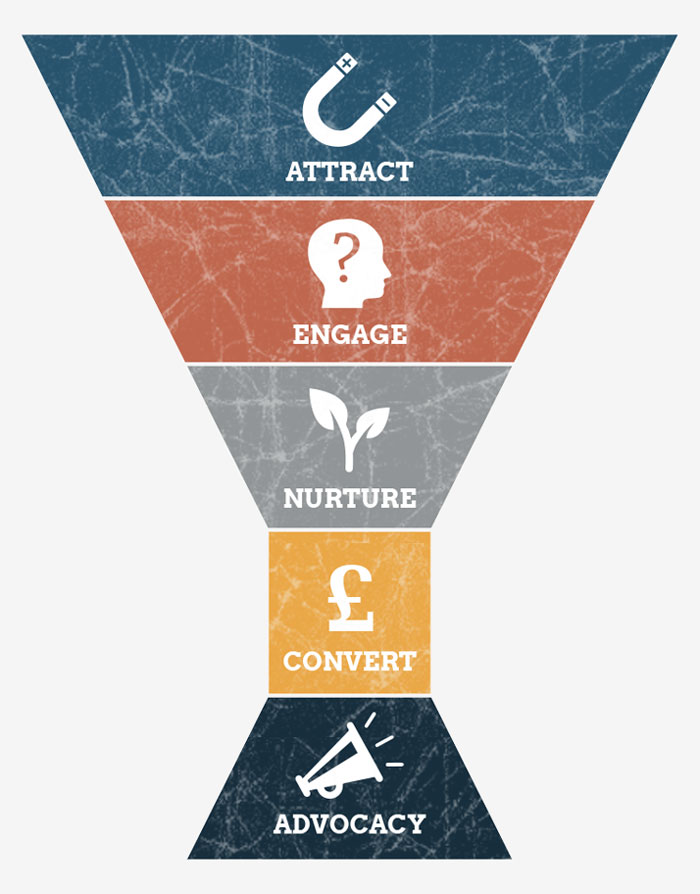
Attract
Increase brand visibility and attract STRANGERS using PPC, SEO, and social media marketing, turning them into website visitors.
Engage
Foster connections with UNKNOWN PROSPECTS through content marketing, remarketing, and interactive website elements to build interest.
Nurture
Guide KNOWN PROSPECTS towards a purchase with email marketing, value-focused content, and chat support, educating and persuading them of your offerings’ value.
Convert
This is where leads turn into customers – additionally, A/B testing, website personalisation, and targeted remarketing can be used to enhance conversion rates.
Advocacy
Finally, the Advocacy stage is where satisfied customers become PROMOTORS. A positive, personalised experience encourages customers to leave reviews, engage in referral programs, and share their experiences, effectively acting as a promotional force for your brand.
The Cyclical Nature of Advocacy
The advocacy stage is pivotal in sustaining and amplifying the sales funnel’s effectiveness. Happy customers who become advocates not only help in attracting more strangers into the top of the funnel but also influence others to move more swiftly through the funnel stages towards conversion, fostering sustainable growth and a loyal customer base.
Advocacy Starts With Satisfied Customers
The best way to start is by ensuring you have plenty of happy customers. These customers will become advocates for your brand, sharing their positive experiences with others and ultimately driving new business to your company.
At its heart, understanding your customers is about empathy. By putting yourself in their shoes, you can create a customer-centric business that nurtures lasting relationships and stands out from the crowd. Take the time to truly understand your customers, and watch your business grow as they become your biggest advocates.
Put your customer’s needs ahead of your own
Putting your customers’ needs ahead of your own is more than just good karma; it’s smart business. By focusing on what truly satisfies your customers, you’re building a foundation of trust and loyalty that sets you apart from the competition. It also turns them into enthusiastic advocates for your brand; when customers feel genuinely valued, they’re more likely to spread the word about their great experiences.
This approach secures your reputation and keeps your customers coming back. The importance of repeat customers cannot be overstated, in fact research by Bain & Company states that there is a 60-70% probability of selling to an existing customer, compared to a only 5-20% to a new prospect – and that even a modest 5% increase in customer retention can lead to 25% to 95% more profits.
Source: Bain.com
Make Personalisation Your Edge
Personalisation is a game-changer for connecting with customers. By customising your marketing messages, emails, texts, and recommendations to fit individual preferences, you significantly stand out. This strategy not only captures attention but deeply resonates with your audience, fostering loyalty and encouraging repeat business. Research from Salesforce has shown that 55% of customers will pay more if a company is customer-centric.
Source: barnraisersllc.com
With marketing automation becoming more accessible to small businesses; tailoring communications to each customer’s likes and needs is now straightforward, enhancing engagement and boosting conversion rates. Personalisation isn’t just a tactic; it’s a powerful way to deepen customer relationships and set your business apart in a competitive landscape.
The Power of Keeping Promises
The promises you make to your customers are more than just words; they’re the pillars of your credibility. Consistently delivering on your promises reinforces your reliability, a quality that customers greatly value and seek in businesses. It’s an unfortunate truth that it takes a long time to build a positive reputation, but it can be destroyed very quickly. Also, keep in mind that consumers are far more motivated to leave bad reviews than good ones. A Gladly study found that 92% of customers would stop buying from a business after only 3 or fewer bad customer service experiences.
Source: gladly.com
When you fulfil your promises and meet expectations, you not only maintain your reputation but also encourage your customers to become promoters of your brand, sharing their trust in you with others.
Can you go the extra mile?
Going above and beyond for your customers can have a profound impact on how they view your brand. Whether it’s through thoughtful gestures like personalised thank-you notes or going the extra mile in customer support, these actions make customers feel cherished and appreciated. Such efforts don’t just strengthen customer loyalty; they motivate your customers to sing your praises, transforming them into powerful advocates for your brand.
Identifying Potential Brand Advocates Among Your Customers
So, assuming you have a successful business with plenty of happy customers, which of your customers make the best advocates? And how do you approach them – after all there are different ways to harness the power of ‘word of mouth’ and to get the most out of your different groups of customers.
This is just a good starting point – if you’ve done your homework about understanding your customer’s needs, they will be different depending on your market and niche.
To effectively identify who among your customer base has the potential to champion your brand, consider the following groups:
The High Scorers
Promoters are identified through Net Promoter Score (NPS) surveys, which ask, “On a scale of 0 to 10, how likely are you to recommend us to your friends, family, or colleagues?” Those responding with a 9 or 10 are your brand’s champions, showcasing a high likelihood of advocating for your products or services based on their satisfaction. These are your best possible brand advocates.
The Connectors
Referrers are invaluable, as they actively bring new customers to your doorstep by recommending your product. Their willingness to refer others is a strong indicator of their potential as brand advocates, demonstrating their trust and approval of your offerings.
Repeat Visitors
Highly engaged and showing continuous interest, repeat visitors to your website or store are prime candidates for advocacy. Their consistent engagement indicates a deep interest in your content and offerings, making them likely to share their positive experiences with others.
Social Sharers
Customers who regularly share your content on social media platforms are already informal advocates. By identifying these social sharers, you can formalise their advocacy, leveraging their networks to increase your brand’s visibility and influence online.
The Critics
While it might seem counterintuitive, critics who leave feedback present an opportunity for brand advocacy. Addressing their concerns effectively can not only convert them into satisfied customers but also into advocates, appreciative of your responsiveness and commitment to customer satisfaction.
By recognising these groups within your existing customer base, you can strategically nurture them into becoming brand advocates. Engaging with promoters, referrers, repeat visitors, social sharers, and even critics, and incentivising their loyalty and engagement can transform them into powerful allies in your marketing efforts, driving growth and fostering a community of support around your brand.
Enjoying This Article?
Never miss another one...
Sign up for our e-mail newsletter and we'll let you know when we publish new pieces like this to help you on your marketing journey.
Which Tactics To Use
Leverage Reviews and Testimonials
Recommended for: nearly everyone – The High Scorers, Repeat Visitors, Social Sharers, The Connectors
Testimonials offer social proof and genuine insights into the customer experience with your brand, making them a crucial element in building trust and credibility. They come in various forms – written, video, or social media posts – and effectively communicate the benefits of your products or services. Sharing these testimonials across your digital platforms can significantly impact purchasing decisions, – almost 95% of purchasers read online customer reviews before making a purchase.
Source: edubirdie.com
We’ve covered getting the most out of your online reviews before, but here are the most crucial points…
Be Proactive With Testimonials
Encouraging customers to share their experiences is crucial. Simplify the process by embedding review prompts in follow-up automated emails, or at the very least have a template email ready to go. Don’t hesitate to ask multiple times (we usually recommend three gentle reminders). Customers, often preoccupied with their daily lives, might need these gentle reminders. Providing direct links to your review platforms in these emails can significantly increase the likelihood of them leaving feedback, making it a seamless part of their experience with your brand.
Monitoring Online Mentions
Utilising tools like Google Alerts and monitoring social media platforms is essential for keeping tabs on what’s being said about your brand online. These resources help you stay informed and respond quickly to feedback, allowing for a deeper understanding of your brand’s reputation and areas for enhancement.
This will also help you find The Critics…
Acknowledging Reviews
For negative feedback, a prompt, empathetic response addressing concerns shows commitment to service improvement. Take complex discussions offline, to ensure a more personal resolution – this not only means you’ll improve your client’s trust by addressing it head-on, but it also avoids “washing your dirty laundry in public.”
You should still make an effort to respond to good feedback too, thanking customers for taking the time to leave positive reviews and sharing them on your social media can boost your brand’s image and customer loyalty.
Actively managing and promoting customer feedback, addressing reviews with care, and leveraging the power of testimonials are strategic steps for small business owners and managers. These practices not only enhance your brand’s reputation but also turn happy customers into vocal advocates, driving growth and success.
Consider a Loyalty Scheme
Recommended for: The High Scorers and The Repeat Visitors
Loyalty programs are an invaluable marketing strategy for businesses aiming to boost customer retention and drive sales. Designed to reward repeat customers, these programs enhance brand loyalty by offering enticing rewards such as discounts, freebies, or exclusive access to events. For small business owners and managers, loyalty programs represent a dynamic way to stand out from competitors and cultivate a dedicated customer base.
The advantages for businesses are clear: increased customer lifetime value, improved satisfaction, and heightened brand advocacy. These programs not only incentivise customers to keep coming back but also foster a sense of appreciation and belonging among them. Customers relish the rewards and special treatment, from free birthday gifts to early sales access, enhancing their overall experience with the brand. Over 70% of consumers are more inclined to recommend your company if you offer a favourable loyalty program.
Source: smallbizgenius.net
Moreover, loyalty programs are a goldmine of customer insights. Tracking members’ purchasing habits and preferences enables businesses to tailor marketing strategies and refine the customer experience. This data-driven approach ensures that promotions and products are aligned with customer desires, further solidifying the relationship between the brand and its patrons.
Implementing Referral Schemes
Recommended for: The High Scorers and The Connectors
Referral schemes are a strategic way for businesses to leverage their existing customer base to attract new clients through rewards or incentives for referrals. Creating an appealing referral program is key; it should provide clear benefits for both the referrer and the referee, such as discounts, credits, or cash rewards. Simplifying the referral process by providing straightforward instructions and easily accessible referral links can significantly encourage participation.
Effective promotion of your referral scheme is key to its success. Utilising a mix of communication channels like email, social media, and in-store signage, complemented by limited-time promotions or bonuses, can significantly enhance customer participation and excitement around the program.
The effectiveness of referral campaigns is further amplified by underlying social psychology principles, including:
- Sharing Benefits: Motivating customers to spread the word about your products or services.
- Social Proof: Utilising the influence of personal recommendations to sway purchasing decisions.
- Reciprocity: Building positive relationships through mutual benefits and emotional connections with the brand.
Choose an Appealing Incentive
When considering incentives to boost your campaign, the offer must be compelling enough to encourage customers to share it with their peers. Just like the examples of lead magnets we’ve discussed, you have the freedom to offer nearly anything, but to truly supercharge your campaign, the incentive must deeply resonate with your target audience.
Also, remember to reward your referrers adequately, ensuring there’s something valuable for them too, ideally something that motivates them to make future purchases with your business. While discounts are a reliable go-to, don’t shy away from thinking creatively to stand out.
Don’t Forget To Track Your Referrals
Tracking referred accounts is important for effective customer acquisition strategies and ensuring the company’s success. A tracking system should be established to monitor referrals, including the referrer’s information, time of referral, and whether a conversion or purchase occurred.
This will allow you to determine the success of your offer and whether it is bringing in enough business to warrant the cost of any incentives. Ask us about our various tools for tracking customer touch points.
We go into much deeper detail on how and why you should run referral campaigns here: Why Referral Campaigns Work.
Referral vs Loyalty Schemes
While referral schemes aim to acquire new customers through incentives for existing customers, loyalty schemes focus on rewarding repeat business to retain current customers. Both play critical roles in customer engagement and business growth but target different aspects of the customer lifecycle.
Encouraging Social Media Shares
Recommended for: The Social Sharers and The Connectors
Social media stands as a pivotal platform for converting happy customers into vocal brand advocates. The strategy revolves around crafting content that not only engages but also compels your customers who trust you to hit the share button, thereby amplifying your brand’s message far and wide. For The Social Sharers, this approach is about making sure you have enough appealing content for them to become effective, and for The Connectors it’s about making it as easy as possible for them to share your content.
Crafting Share-Worthy Content
The cornerstone of encouraging social media shares is to produce content that truly resonates with your audience. The key is to create content that adds value to your audience’s social media feeds, making them more likely to share it with their own networks. This could range from insightful blog posts that address specific customer pain points, to engaging videos that showcase your product in action, or even entertaining infographics that distil complex information into digestible visuals.
Simplifying the Sharing Process
Integrating social media buttons and compelling calls-to-action (CTAs) within your content plays a crucial role in facilitating shares. A strategically placed “Share This Post” button or a CTA that persuasively encourages users to “Spread the Word” can significantly lower the barrier to sharing.
Promoting User-Generated Content
When customers share their personal experiences or create content that features your brand, it serves as a powerful endorsement. Initiating contests, soliciting reviews, and creating branded hashtags are effective ways to inspire your audience to generate content and foster a community of customers who feel connected to and valued by you and your company.
Encouraging Engagement
Engagement doesn’t end with sharing; it’s also about actively participating in the conversations that ensue. Responding to comments, acknowledging shares, and facilitating discussions around user-generated content can further cement customer relationships. By doing so, you transform passive consumers into active brand ambassadors.
Conclusion
Your best marketing tool is positive word-of-mouth from satisfied customers – especially online where building trust is essential to success. Peer recommendations carry more weight than any ad could, making your happy customers your brand’s biggest champions. These brand advocates, fueled by great experiences with your business, not only boost your credibility but also sway potential customers in your favour, especially on social media and review platforms where their voices are heard the loudest.
Turning your customers into advocates is all about genuinely understanding and meeting their needs, engaging them with personalised interactions, and always keeping your promises. Whether it’s through referral programs, loyalty schemes, or encouraging shares on social media, these strategies directly involve you in building a community that actively supports and promotes your business. By identifying potential advocates—be they enthusiastic promoters, loyal referrers, or even constructive critics—and investing in these relationships, you’re setting up a cycle of continuous growth.
This approach doesn’t just boost your marketing efforts, but lays the groundwork for lasting success in a competitive market, all by leveraging the power of advocacy directly from your customer base.
Xposure – Online Marketing Company
Based between Mansfield & Newark in Nottinghamshire, we are an online marketing company providing hands-on experience and knowledge to businesses throughout the United Kingdom.
We work with businesses to help them identify potential markets, and build creative, results-driven marketing campaigns that target their ideal customers to turn them into qualified leads. If you would like some help getting the most out of your referrals, reviews, and more customers – please get in touch with us below.