GOOGLE REVIEWS

Digital marketing is used by businesses to promote their products or services online and expand their reach to a broader audience. It involves creating valuable and engaging content tailored to the target audience, optimising it for search engines, and applying marketing strategies to convert potential customers into paying clients.
What is Digital Marketing?
This form of marketing uses various online channels, such as social media, search engine optimisation (SEO), email marketing, content marketing, and more, to generate leads and increase sales. By effectively implementing digital marketing techniques, you can significantly enhance your online presence to reach your ideal customer, ultimately building a loyal customer base and generating more revenue.
Goals of a Digital Marketing Agency
The main objectives of a digital marketing agency are focused on helping businesses grow and succeed in the digital realm – generating leads, increasing brand awareness, driving website traffic, and maximising conversions. Through comprehensive digital marketing strategies, agencies help businesses reach a wider audience across various online channels.
One of the primary goals of a digital marketing agency is to generate leads for its clients. By targeting and engaging with potential customers and their specific needs, a digital marketing agency can attract high-quality leads that have a higher chance of converting into paying customers.
Driving website traffic is also a core objective for digital marketing agencies. By implementing effective strategies, agencies help businesses attract more visitors to their websites, creating more opportunities for conversions and sales.
Ultimately, the primary goal of a digital marketing agency is to maximise conversions. Whether it’s turning website visitors into leads or potential leads into loyal customers, agencies work closely with their clients to optimise marketing strategies and achieve a higher return on investment (ROI).
The Funnel
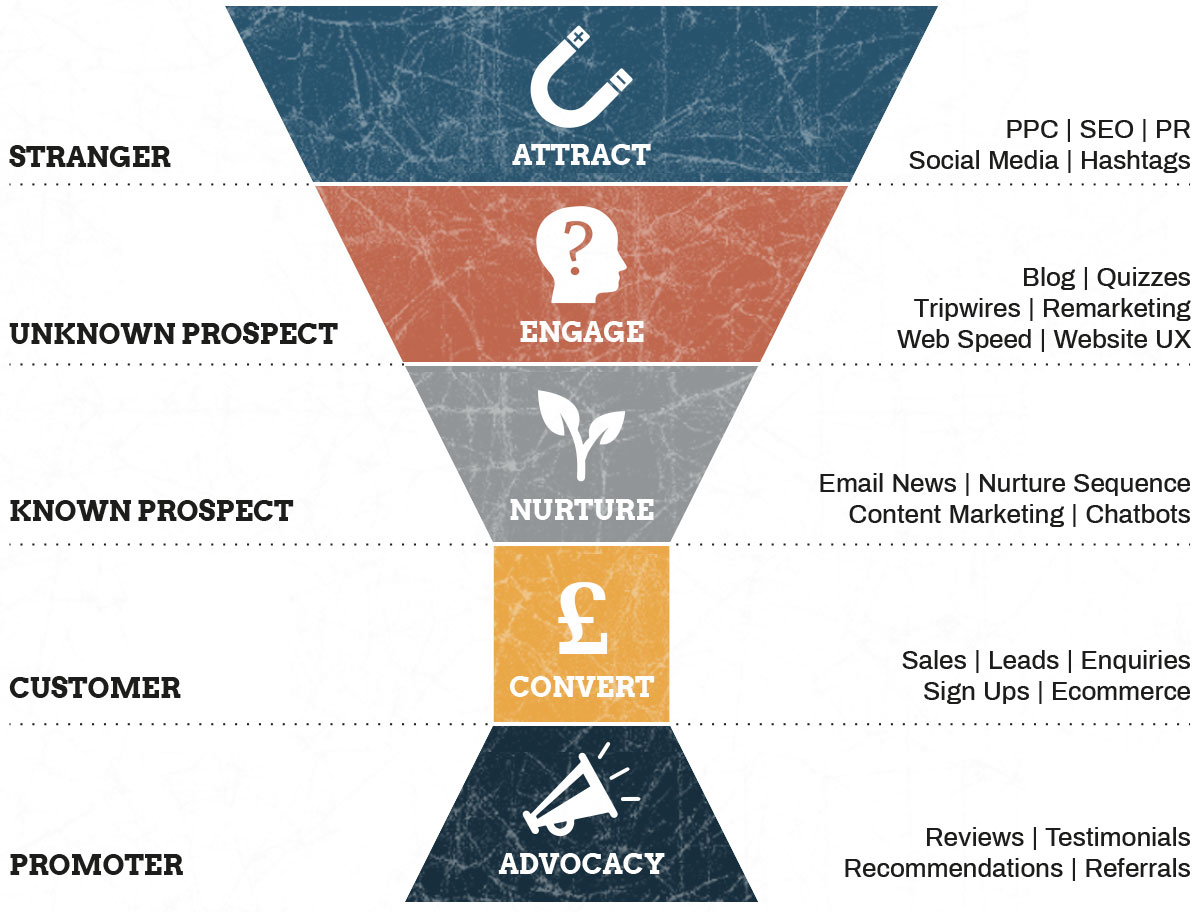
At Xposure, we recommend the sales funnel approach, which we use for each client to examine how leads move through the customer journey and which marketing services will help each stage. This includes social media marketing, content marketing, search engine optimisation (SEO), and paid advertising such as Facebook ads. With so many tools to choose from, the sales funnel can help you navigate which tool or marketing channel is appropriate to use and when.
An effective sales funnel is a critical component of any successful digital marketing strategy. It involves guiding potential customers through a series of steps that lead them from being unaware of your business to becoming loyal customers. The funnel consists of different stages such as attract, engage, nurture, convert and advocacy. Each stage requires specific strategies and tactics to move potential leads closer to making a purchase. By understanding the customer journey and aligning marketing efforts accordingly, businesses can optimise their sales funnel to generate high-quality leads and increase sales.
Attract
The first stage of the marketing funnel is “Attract,” and it holds significant importance in your overall strategy. At this stage, your primary goal is to draw potential customers to your website. Utilising various marketing services such as PPC (pay-per-click), SEO (search engine optimization), social media marketing, and hashtags, you can effectively attract the attention of your target audience. By implementing these strategies, you increase your website’s visibility and position it in front of potential customers who are actively seeking products or services similar to what you offer.
Engage
Once you’ve successfully attracted customers to your website, the next step is “Engage.” In this phase, the focus is on establishing a meaningful connection with these visitors and fostering a positive customer journey. Your aim is to build relationships with potential leads, creating a sense of trust and affinity towards your brand. To accomplish this, consider employing strategies like content marketing, which provides valuable information and insights to your audience, remarketing to keep your brand at the forefront of their minds, interactive elements like quizzes to increase engagement, enticing giveaways, and the strategic use of tripwires that lead potential customers further into your funnel. All of these tactics work together to ensure that customers stay engaged and intrigued by what your business has to offer.
Nurture
Moving on to the third stage of the marketing funnel, “Nurture” is all about convincing potential customers to take the next step and invest in your products or services, and identifying/qualifying the best leads. This stage is essential for guiding potential leads through the decision-making process and providing them with the information they need to make informed choices. Employ strategies like email marketing to deliver personalised and relevant content to potential customers, content marketing that showcases the value and benefits of your offerings, and chatbots to engage visitors and address their inquiries in real-time. By nurturing potential customers with these tactics, you can gently guide them towards making the ultimate purchase decision.
Convert
The fourth stage of the funnel is “Convert,” where you turn interested visitors into paying customers. This phase involves implementing various strategies to boost conversion rates and encourage potential customers to complete their purchases. A/B testing allows you to optimise your website and marketing materials, personalization creates tailored experiences, and remarketing campaigns keep your brand visible to those who have shown interest. By effectively utilizing these conversion-focused strategies, you can increase the likelihood of potential customers becoming actual customers.
Advocacy
The final step of the marketing funnel is “Advocacy.” At this stage, the primary focus is on building a loyal customer base and turning customers into enthusiastic advocates for your brand. Providing an enjoyable and personalised customer experience is crucial in nurturing long-term relationships. Strategies such as collecting reviews and testimonials from satisfied customers, implementing referral programs to encourage word-of-mouth marketing, and conducting customer surveys to gain valuable feedback, all contribute to fostering a strong and positive relationship with your existing customers. By prioritizing customer retention and creating brand advocates, you can significantly boost your ROI and drive more sales in the long run.
Enjoying This Article?
Never miss another one...
Sign up for our e-mail newsletter and we'll let you know when we publish new pieces like this to help you on your marketing journey.
Understanding Your Target Audience
Now we’ve outlined the basics of the sales funnel and desired customer journey, let’s talk about who you should be aiming to guide through the stages of the funnel (hint – the answer isn’t “everyone”).
One of the key components of really successful digital marketing is truly understanding your target audience. In the digital marketing world, “content is king”. But it’s not just about creating any content; it’s about crafting content that resonates with your target audience. With a deeper understanding of your potential customers, their needs, preferences, and behaviours, you can tailor your efforts to effectively communicate and engage with them, answering their needs, questions and worries, increasing the chances of generating leads and converting them into loyal customers as they move them down the sales funnel.
To reach your target audience effectively, you need to understand who they are and what they are looking for. This requires market research and creating an ideal customer profile, which outlines the demographics, interests, pain points, and motivations of your target audience. Armed with this information, you can begin crafting content that speaks directly to their needs and desires.
How To Identify Your Target Audience (or Ideal Customers)
To identify your target audience, it is crucial to gather information through surveys and data collection. By conducting market research, examining website analytics, and customer feedback, you can gain valuable insights into who your ideal customers are, their behaviours and preferences, and how to reach them. This data can inform your marketing strategies and help you create content that resonates with your audience.
Once you’ve completed this research, you can create a buyer persona that represents the ideal customer you want to reach. The buyer persona should include details such as the tone of voice to use in communication, the products or services your audience is interested in, the advantages they expect in their relationship with a company, and the channels they concentrate on.
We’ve covered lots on how to build a customer persona before, here are two very specific articles:
- What Are Personas And Why They Are Important?
- How To Create A Customer Persona And Use It For Social Media

Leveraging the best channels for your audience
Identifying the channels where your target audience concentrates is crucial for reaching and engaging them effectively. Different demographics prefer consuming content in different ways. For instance, younger audiences might be more inclined to engage with video content on social media platforms like TikTok or Instagram, while professionals might prefer reading a well-researched whitepaper or blog post on LinkedIn.
Whether it’s social media platforms, email marketing, or content marketing strategies, allocating your marketing budget appropriately to these channels can yield significant results. By focusing your marketing efforts on the channels where your audience is most active, you can increase your chances to convert higher-quality potential leads.
This targeted approach will not only increase your chances of converting potential clients into loyal customers, but it will also help you build a strong customer base and boost sales.
Developing an Engaging Message for Your Target Audience
Once you know who your target audience is, and how best to reach them – what do you say to them?
The first step is to ensure that your content is relevant. It should address the specific challenges and pain points that your target audience is facing. By providing solutions and valuable insights, you position yourself as an expert in your industry and a trusted resource for your potential customers.
In addition to relevance, your content should also be valuable. This means offering something of worth to your audience, whether it’s practical tips, industry insights, or entertaining content that brings value in a different way. The more valuable your content, the more likely your target audience will engage with it and share it with others.
Another important aspect of crafting content for your target audience is using the right tone and language. You need to speak their language and communicate in a way that resonates with them. Consider their level of knowledge and expertise and adapt your content accordingly. Whether it’s using technical jargon or simplifying complex concepts, the key is to speak to your audience in a way that they understand and connect with.
Employing content marketing strategies enhances the effectiveness of your message, enabling you to create impactful content that grabs attention, builds trust, and drives conversions. Through blog posts and valuable resources showcasing your expertise, you not only demonstrate your knowledge but also establish trust with potential clients. By addressing their challenges and offering solutions, you position yourself as a valuable resource and thought leader in your industry. This builds a strong foundation of trust and credibility, making potential clients more likely to engage with your offerings.
Additionally, keyword research and other search engine optimisation techniques in your content can help your message reach the right audience. By optimising your written content to match what your target audience is searching for, you increase your chances of appearing in organic search results and attracting qualified leads.
Defining Objectives For Your Digital Marketing Strategy
A successful digital marketing campaign begins with a well-defined set of goals. These goals act as a guiding light, directing your efforts and maximising your chances of success. As you embark on your campaign, take the time to clearly define your objectives. Ask yourself: What do you want to achieve through digital marketing? Is it about increasing brand awareness, driving website traffic, generating leads, or boosting sales? Each of these objectives requires a different approach, so it’s essential to be specific and focused.
By setting specific goals that align with your overall business objectives, you create a solid foundation for your digital marketing strategy. This clarity ensures that every step you take is purposeful and targeted. It prevents you from getting lost in the day-to-day and helps you concentrate your resources where they matter most.
Remember that your goals should be measurable. You want to be able to track and evaluate the effectiveness of your efforts. For example, if your goal is to generate leads, define a quantifiable number of leads you aim to achieve within a specified timeframe. This way, you can easily monitor your progress and make adjustments if necessary. Furthermore, your goals should be realistic and attainable. While ambition is commendable, setting unattainable goals can lead to frustration and disappointment. Strike a balance between setting challenging targets and ensuring they are achievable with the resources and capabilities at hand.
Lastly, always keep your target audience in mind when defining your goals. Understand their needs, preferences, and behaviours to tailor your objectives accordingly. By aligning your goals with what your audience desires, you increase the chances of resonating with them and fostering meaningful connections.
For more comprehensive insights and details be sure to read our article on How to plan a successful marketing campaign.

Measuring Results to Optimise Performance
Measuring lead generation efforts yields a better understanding of customer acquisition metrics. Key performance indicators like conversion rates, cost per lead, and return on investment provide essential insights into the efficiency of marketing strategies and channels. Armed with this data, you can identify which channels and tactics generate the most leads and drive high-quality conversions, enabling them to focus on what works best.
Moreover, the process of measuring results empowers businesses to identify areas for improvement and refine future marketing campaigns. Thorough data analysis sheds light on what elements are thriving and what aspects need enhancement, guiding businesses to optimise underperforming elements. Embracing A/B testing, a valuable approach, allows businesses to experiment with variations of content, websites, or individual elements to determine which version performs optimally. This iterative testing and optimization help businesses make data-driven decisions that elevate campaign performance and yield better results.
Digital marketing can boost sales and generate leads for your business
In essence, with a well-executed digital marketing strategy, you can attract, engage, nurture, convert, and ultimately create brand advocates among your target audience that can significantly impact lead generation and boost sales for your business. By understanding the importance of a well-defined funnel, and identifying your ideal customers you gain a solid foundation for success. With tailored strategies to reach your target audience, with engaging messages and relevant and valuable content that speaks directly to their needs, you position yourself as a trusted industry expert, fostering connections and building brand loyalty.
Defining clear objectives for your digital marketing strategy is vital. Specific, and realistic goals to provide direction, and measuring your results are essential components of optimising performance. By tracking key metrics and evaluating campaign outcomes, you can identify areas for improvement and make data-driven decisions to enhance your future marketing efforts.
Embrace the power of digital marketing to generate leads, increase sales, and propel your business to new heights in today’s dynamic and competitive marketplace.
Xposure, Digital Marketing Agency Newark & Mansfield
Based between Mansfield & Newark in Nottinghamshire our boutique digital marketing agency services provide hands-on experience and knowledge to businesses throughout the East Midlands.
We work with businesses on a monthly bases to help them identify potential markets, and build creative, results-driven digital marketing campaigns that target their ideal customers to turn them into qualified leads. If you would like some help automating some of your sales and marketing processes or identifying the best leads through website customer behaviour – please get in touch with us below.