GOOGLE REVIEWS

Photo Credit: Giles Clarke for OCHA
Last year the UN unveiled a petition challenging the role of social media in democracy with just one simple act. Taking a selfie.
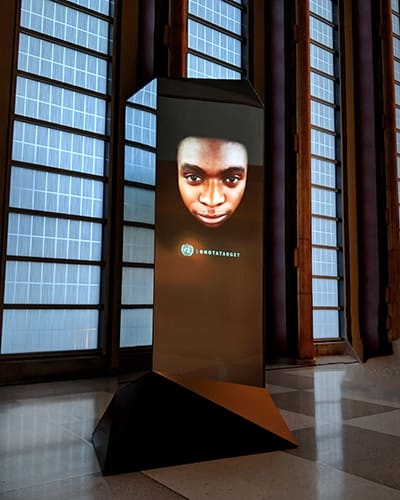
Social Media. The thing we love to hate and hate to love. Despite hearing about bad news every morning, gloomy stories on how websites are ‘selling data’ or how your ‘phone is listening in on your conversations’, we can’t resist a scroll on Facebook every night or a flick through Twitter to see what the world is up to. There’s the social pressure to have as much fun, do the most interesting things, and stage it all trying to live up to the image of living the “perfect life.” It reaches even further with incidents such as the Cambridge Analytica affair, where psychological profiles were created from Facebook data to help their clients “hack” elections.
Social Media is changing the world, but not always in the negative way the news and tabloids portray. Although people are sceptical, it has incredible potential for everyone to make a difference – where people can help save lives and be connected to people around the world, such as last year’s ground-breaking idea for the world’s first “living” petition.
World Humanitarian Day – changing the world for the better.
 Every 19th August is World Humanitarian Day, an event hosted by the UN, but after not being able to reach the younger generations in previous petitions for World Humanitarian Day, a new direction was required.
VML’s Creative executive director, Craig Elimeliah who worked in collaboration with the UN said “We live in a world where trust has been lost in the media and we wanted to try and do a small part in helping to rebuild some of that trust by allowing people to get directly involved with something that could not be faked.”
The result was the social media campaign #NotATarget to show world leaders throughout the U.N. General Assembly, that civilians and aid workers are #NotATarget. Unlike any other petition, with this ‘living petition’ support isn’t shown through signatures, it’s shown through selfies, giving a human face to civilians and aid workers. The selfies from thousands of people, using social media as a pioneer, to share photos around the globe were then projected onto the walls throughout the U.N. General Assembly the following month, a powerful message to show a ‘united’ world’s faces in this fight to help stop these tragedies.
In 2017 31,904 civilians have died in war zones due to carelessness in conflict—a 38% increase from 2016. Through the power of social media, the UN’s Office for the Coordination of Humanitarian Affairs hoped to reduce these harrowing numbers for the better. This campaign helped to show an effective, forward-looking use on social media and build a small step in the right direction to help everyone see that social media isn’t the Devil we all believe it is.
This year – get involved
 This year for World Humanitarian Day, there is a focus on Women Humanitarians (#womenhumanitarians), to give a focus and recognition to all women humanitarians who help at every hour, every day. With links to many campaigns about gender equality that are still going on to this day, and helping to show the uphill struggle and strength these women humanitarians have daily. For the 24 hours of the day the UN will share 24 stories from women humanitarians on their social media’s which are:
Twitter = @UNOCHA
Facebook = United Nations OCHA
Instagram = @un_ocha
Website for World Humanitarian Day
Enjoying This Article?
Never miss another one...
Sign up for our e-mail newsletter and we'll let you know when we publish new pieces like this to help you on your marketing journey.
Changing the perspective on Social Media
Social media is one of the most innovate inventions of all time and over the last 20 years has been changing the world. #NotATarget and #womenhumanitarians show that Social Media when used responsibly, can be an incredible force for good. Using the hashtag #NotATarget the campaign reached over 3.5 million people and #womenhumanitarians has reached nearly 1.4 million people so far on Twitter, Facebook and Instagram alone.
In 2017 the Syrian war civilian death toll was 10,507, then after the campaign was launched in August 2018 to August 2019 the death toll is 5,391 – nearly a 50% decrease. Showing social media really does make a difference, certainly not all of it, but it can’t be a coincidence.
Yes, it has its problems, but social media allows us to instantly connect with people all over the world, at any time, immediately. Businesses across the world can connect with clients and promote their business to anyone and everyone – as well as letting people participate in projects they care about, and can potentially save thousands of lives. It helps us in our lives every day more than we realise.
To contribute to Women humanitarians help share the 24 stories on social media for everyone to see using #womenhumanitarians.
If you would like to see how we can help you can harness the power of Social Media you can find out more at https://xposurecreative.uk/digital-marketing/